Retiring Abroad: Social Security, Medicare and Your Logins
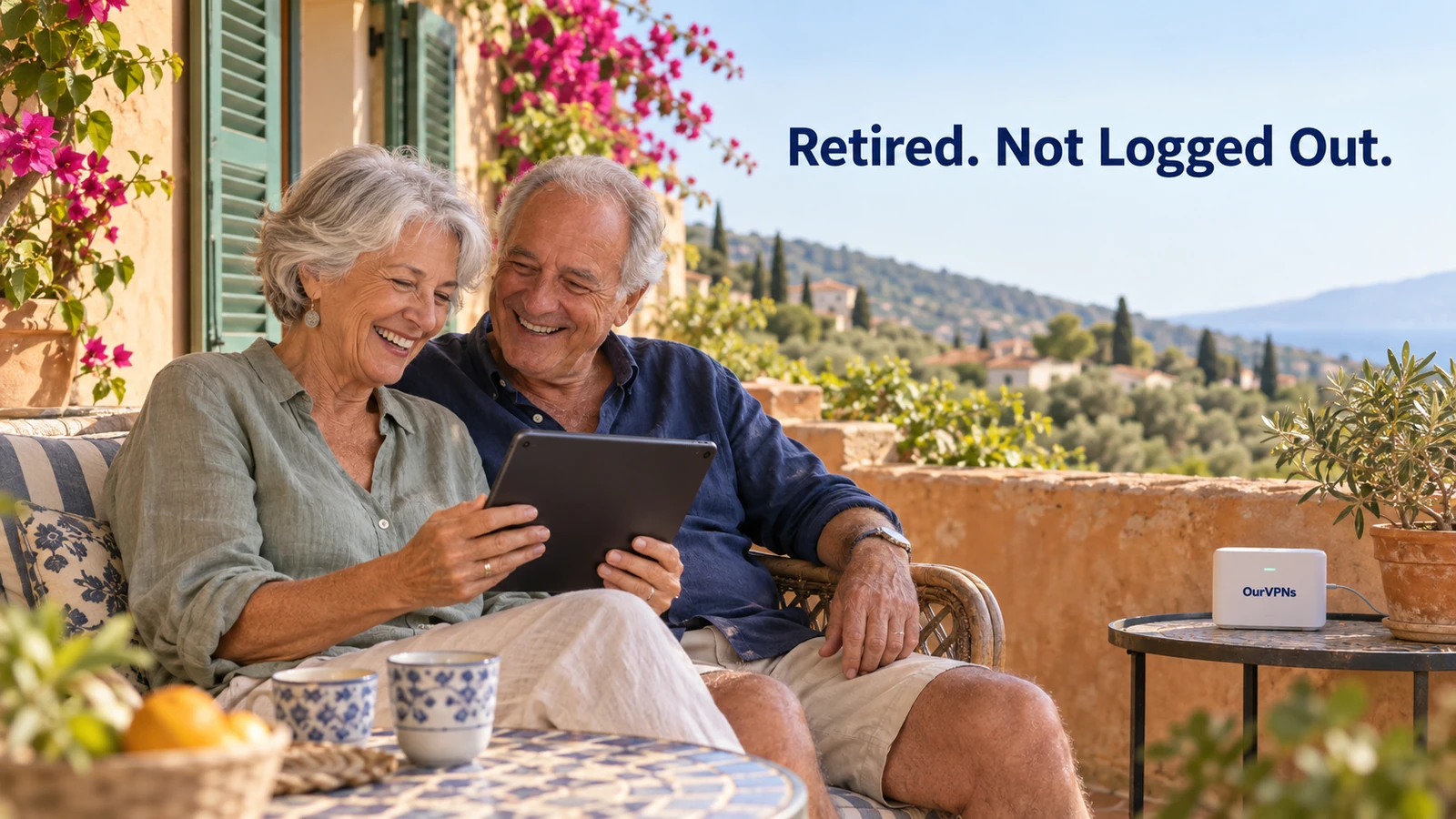
You worked for decades so you could someday drink coffee on a terrace somewhere warm and not set an alarm. Good news: plenty of Americans do exactly that, in Mexico, Portugal, Costa Rica, Panama and beyond, and your Social Security can usually follow you there.
Less fun news: retiring abroad comes with a stack of US paperwork that doesn't retire when you do, plus a surprising number of logins that stop cooperating the moment you land. Here's what to sort out, and in what order.
The short version
Social Security can usually be paid to you in most countries. Check yours first, and never ignore the questionnaire SSA mails you.
Your online Social Security account works from abroad, but with an international address you'll need an ID.me login, not Login.gov.
Medicare generally doesn't cover care outside the US, so you need a health plan where you live.
You still file US taxes, and moving abroad doesn't make Social Security or pensions tax free.
Your bank, brokerage and email will start flagging your logins unless you keep them consistent. Crypto apps can be even pickier; here's how to handle Coinbase, Kraken and Robinhood logins abroad.
Social Security: yes, it usually follows you
If you're a US citizen, Social Security can generally keep paying you in most countries. There are a few countries where SSA can't send payments, and some special rules for certain situations, so before you commit to a destination, run it through SSA's own Payments Abroad Screening Tool. It takes a couple of minutes and answers the only question that really matters: will your checks keep coming?
A few things retirees trip over:
Where the money lands. You can keep getting paid into your US bank account, or into a bank in a country that has an international direct deposit agreement with the US. Many retirees keep the US account, because it keeps everything else (bills, cards, transfers) simple.
The questionnaire. SSA sends beneficiaries who live abroad a questionnaire every one to two years to confirm they're still eligible. If you don't answer it, your payments can be suspended. This is one of the best reasons to keep a reliable US mailing address or someone checking your mail.
SSI works differently. Supplemental Security Income generally stops if you're outside the US for 30 days in a row. If you receive SSI, talk to SSA before you plan any long stay abroad.
Tell SSA where you live. Report your foreign address. Hiding it isn't a clever workaround, it's how people end up owing benefits back.
Logging into your Social Security account from abroad
This one catches almost everyone. Per SSA's own FAQ, if you live outside the United States you use your my Social Security account with an ID.me credential. Login.gov requires a US address, so it isn't an option for civilians with an international mailing address. If you already had an account before moving, plan to set up ID.me for it before you go, while you still have easy access to your US phone and documents.
Worth knowing: this is an identity rule, not an internet problem. No VPN, router or IP address changes it, and you shouldn't try to get around it. Set up ID.me properly and it works.
Medicare: mostly stays home
Medicare generally doesn't pay for care you get outside the US, with only a few narrow exceptions. Medicare's own fact sheet on coverage outside the United States spells out the details. So if you're moving abroad, you need real health coverage where you live: the local public system if you qualify, local private insurance, or an international plan.
Decisions worth making on purpose, not by accident:
Keep or drop Part B? Many retirees abroad keep paying for Part B so they're covered on trips back and don't face a late enrollment penalty if they move home later. Others drop it to save money. There's no universal right answer, but the penalty for dropping and re-enrolling later is real, so decide with the numbers in front of you.
Medigap travel coverage is for trips, not living abroad. Medigap plans that include foreign travel emergency coverage pay 80% of emergency care after a $250 deductible, up to a $50,000 lifetime maximum, and only for emergencies in the first 60 days of a trip. Helpful on vacation. Not a plan for living somewhere full time.
US telehealth usually can't follow you. US doctors are generally licensed to treat patients where the patient physically is. Connecting through a US IP doesn't change where you're sitting, so don't rely on your US telehealth app as your healthcare abroad.
Prescriptions need a plan. US mail order pharmacies generally won't ship abroad, and some common US medications are restricted in other countries. Sort out a local doctor and pharmacy early.
Taxes: retired, but not from the IRS
The US taxes its citizens wherever they live, so you keep filing. A few retiree specific surprises:
The foreign earned income exclusion doesn't cover retirement income. It applies to money you earn from working, not to Social Security, pensions or IRA withdrawals.
Social Security can still be taxable depending on your total income, and some countries have tax treaties with the US that change which country taxes what.
Foreign bank accounts get reported once they add up to more than $10,000 at any point in the year.
State taxes can follow you if you keep strong ties to a state, like an address, a driver's license or a house.
The IRS page for US citizens abroad is the starting point, and a cross-border tax pro is worth every penny, especially in your first year abroad.
Your money: banks and brokerages
Keep two US banks with separate cards, so one fraud freeze doesn't strand you.
Ask your brokerage before you move. Some US brokerages restrict what you can do, or even close accounts, once you have a foreign address, and residents of some countries can't buy certain US funds. Don't hide your address from them to avoid it. Ask first, and move accounts if you need to while you still live in the US.
Understand the two kinds of bank blocks. A card declined at a shop and a locked online banking login are different problems. We explain both in why your US bank keeps blocking you abroad.
The digital part: keep your logins boring
Here's the part retirement guides rarely mention. Your bank, brokerage, email and even your streaming apps watch where you log in from. When your logins suddenly come from another country, and bounce between home Wi-Fi, a café and your phone, their fraud systems react the way they're designed to: extra verification, locked sessions, "was this you?" emails.
What keeps things calm:
Log in from one steady US connection. A dedicated US residential IP makes your logins look the same as they did at home, every day, from every device. That's the part of the problem an IP can fix. It doesn't change the ID.me rule, your residency, or anything you're required to report.
Put it on a small router. A travel router carries that US connection for every device in the house, including the TV. It's also the easiest setup for anyone who doesn't want to fiddle with apps: plug it in, connect to its Wi-Fi, done. Your grandkids can set it up once over video chat and never hear about it again. How a travel router home VPN works explains the idea.
Keep your US number. It's how your bank, email and ID.me send verification codes. Add backup sign-in methods too, like an authenticator app and printed backup codes. Why authenticator apps show the wrong location covers keeping Google and Microsoft accounts from locking you out. Our guide to international phone plans covers cheap ways to keep it active.
Keep watching the news and the game. US network news, local stations and sports apps usually don't work abroad. A US residential connection on your router fixes that too. Our country guides show how it works in Mexico, Portugal, Costa Rica and Panama.
A quick grown up note
A US IP address is for keeping your own logins from getting flagged as suspicious. It isn't a way to pretend you still live in the US to Social Security, Medicare, the IRS or your brokerage. Those organizations need your real address, and being upfront with them is what keeps your benefits and accounts safe.
Quick answers
Can I get Social Security if I retire abroad? In most countries, yes, if you're a US citizen. Check your destination with SSA's Payments Abroad Screening Tool, and answer the questionnaire SSA sends every one to two years.
Can I access my Social Security account from another country? Yes. With an international address, you use your my Social Security account with an ID.me credential. Login.gov requires a US address.
Does Medicare work outside the US? Generally no, apart from a few narrow exceptions. You'll need health coverage in the country where you live. Medigap travel coverage only helps with emergencies in the first 60 days of a trip.
Do I pay US taxes on Social Security if I live abroad? You still file US taxes. Social Security can be taxable depending on your income, and tax treaties with some countries change the details. A cross-border tax professional can tell you what applies to you.
Why does my bank keep asking me to verify my identity since I retired abroad? Because your logins now come from a new country and often from changing networks, which looks like fraud to automated systems. Logging in from one consistent US connection reduces those checks.
Can I use my US telehealth provider while living abroad? Usually not. US doctors are generally licensed based on where the patient is physically located, and a US IP doesn't change that. Plan on local healthcare.
The short version
Retiring abroad works beautifully when the paperwork is handled up front. Check that Social Security pays where you're going, set up ID.me for your SSA account, answer every questionnaire, get real health coverage where you'll live, keep filing US taxes, and ask your brokerage about foreign addresses before you move. Then keep your US logins calm with one steady US connection on a router, and get back to the coffee on the terrace.
Want your bank, email and TV to act like you never left? Start your free trial and set it up before the movers show up.